Posts

Showing posts with the label information

Robot! Humans are Showing Kindness with Their AI Helpers.
Image
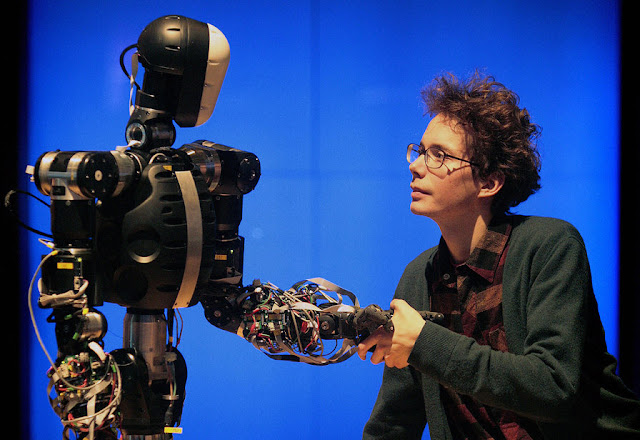
We spent a lot of time in 2017 talking and writing to non-humans. Whether by interacting with a chatbot or by asking Alexa for help, much of our communication is moving away from human to human and its etiquette. Which raises the question: how should we be treating our AI helpers? With kindness or indifference? "People tend to be very friendly in the initial delivery," says Dennis Mortensen, founder and CEO of x.ai. The New York-based company created two virtual assistants, Amy and Andrew Ingram, who help with scheduling meetings. Service users simply copy Amy or Andrew into an email and virtual assistant, delivering them frequently long and long when scheduling meetings. According to Mortensen, 11% of communication with "Amy" and "Andrew" is showing gratitude for their work. Even though virtual assistants do not have feelings, people feel an urge to express their graces, along with adding social niceties. Hey Amy, would you be so kind ...? ...
Human DNA Will Be Synthesized Within 5 Years, Prominent Geneticist States

Image
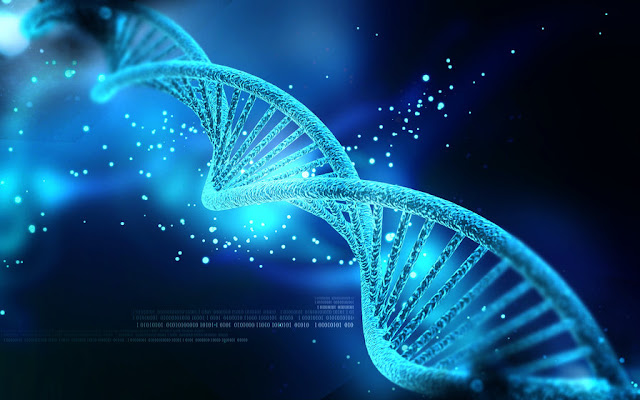
The Human Genome Project (HGP) was the most ambitious and far-reaching scientific analysis of our DNA. Just a reminder, a genome is a complete set of instructions or DNA, the blueprints for building a complete organism. The project brought innumerable findings, which are just beginning to shape medicine and society. However, something else has become very clear. Being able to "read" our DNA does not mean that you know everything about it. To develop understanding, a new program seeks to write whole genomes from scratch, including plants, microbes, animals and even human DNA. But the latter is creating a storm of controversy over whether we should do it at all. Today, we have the entire human genome presented to us, about three billion base pairs in total. These are adenine (A), cytosine (C), guanine (G) and thymine (T). When they come together, they form the iconic double helix with which we are familiar. The genome is so complex, there are many things that we simp...

Plant Sucks CO2 out of the Air and Feeds It to Vegetables

Image
While there are those who want to discuss the causes of climate change and how much humanity has contributed to it, others are looking to address greenhouse gas emissions through technology. A first-class commercial plant began to operate recently in Switzerland, which sucks CO2 from the air to sell to buyers. The Climeworks AG plant near Zurich is the first to capture CO2 on an industrial scale, selling about 900 tonnes of gas per year to help grow vegetables. That's how much carbon dioxide 200 cars would loose. Climeworks sees this as a first step, with the company's goal is to capture 1% of global CO2 emissions by using this type of negative emissions technology. Its long-term goal can be achieved with 250,000 additional plants like this. The company emphasizes the scalability of its plants as a favorable factor to achieve its objectives. "Highly scalable negative emission technologies are crucial if we are to stay below the two-degree goal of the interna...

Reasons We Shouldn’t Be Afraid of Aliens

Image
As perhaps we drew exciting and frighteningly closer to discovering life in other parts of the universe, the chorus of people who warn us to be careful what we want is getting stronger. The most famous, renowned physicist Stephen Hawking has argued for hitting the brakes, reiterating until 2016 his concern to seek alien contact in his comments on possibly life in Gliese 832c: "One day, we could receive a signal from a planet like But we must be careful not to answer, because knowing an advanced civilization could be as if the Native Americans found Columbus. "That did not turn out so well." For example, European germs were deadly to the natives and some feared that they might happen to us. Astrobiologist Lewis Dartnell, however, does not agree with all of this. From their perspective, things are considerably less frightening than many people think. In an article recently published in the Literary Hub, it offers a number of solid comforting arguments for wh...

Everybody Lies, But Google May Know the True You.

Image
Everyone lies - to friends, families, and their significant other. But it seems to be brutally honest with our Google searches. It seems that we are writing our deepest and darkest fears in the omnipresent search box. Unlike the cured and somewhat ambitious characters portrayed in social networks, our Google searches offer a window into the human psyche. "I think there's something cathartic about telling things to Google that you do not tell anyone else," says Seth Stephens-Davidowitz. Stephens-Davidowitz is the author of the bestseller Everybody Lies: Big Data, New Data, and what the Internet can tell us about who we really are, and a former data scientist on Google. He is also a Harvard-trained economist who received his Bachelor of Philosophy from Stanford; A data scientist attracted by the most important questions of life. To the data scientist, our relationship with Google is acting as a true digital serum. What we say to others, and maybe even what we...

Wireless Charging Road for Electric Buses new technology

Image
The technology behind the wireless charge or inductive load was discovered by Nikola Tesla in the 1890s and uses an electromagnetic field to transfer energy between two objects. In chargers, an induction coil is used to create an electromagnetic field, while a second induction coil in the charging device is used to take the field energy created and convert back into an electric current that charges the battery . All sounds relatively simple, but the inductive load has been difficult to implement, especially with larger objects, moving objects and objects that are farther away from the loader. These limitations would make urban buses, for example, unlikely candidates to use the technology. However, an Israeli company called ElectRoad announced that it has been developing a new technology (Dynamic Wireless Power Transfer - DWPT) that can drive a vehicle in motion without cables from the road. The results of the first tests were good enough to win the company a $ 120,000 gr...

Discovery of Earth’s Oldest Fossil Suggests Life Elsewhere in Our Solar System

Image
An international team of researchers, led by scientists at University College London (ULC), made a startling discovery that is changing the way we look at the origins of life on Earth. Fossilized bacteria were found in rock features in northern Quebec, Canada, in an area known as Nuvvuagittuq Supracrustal Belt (NSB). These rocks contained bacterial microfossils that extend aft measured less than the width of a human hair. Fossils reside in quartz layers between rock formations along the eastern shore of Hudson Bay. The discovery would never have been made without the effects of climate change. The oldest sedimentary rock in the world can be found here.1 These fossilized bacteria are much older than those previously discovered, dating back to 3.77-4.28 million years ago. The Earth itself is 4.6 billion years old. Last August, fossilized bacteria found in rock samples in Greenland became the earliest known microfossils, located in 3.7 billion years. These two discover...

Americans Are Having a Lot Less Sex, Say Researchers. Is Tech to Blame?

Image
US couples are having sex much less often than before the emergence of smartphones, social media and Netflix, according to a new study published in the Archives of Sexual Behavior magazine. Married couples have sex 11 times less each year (from 67 to 56) than in 2002. Before this time, the sexual frequency was relatively static . The study authors examined the possible reasons for the overall decrease in frequency, such as longer hours of work and use of pornography. As it turns out, longer working hours and visualization of pornography were associated with having more, not less, sex. Estimated hours per year American adults had sex, 1989-2014: From the magazine Archive of Sexual Behavior, "Decline in sexual frequency among American adults, 1989-2014" Why the rise of social networks and smartphones coincides with a decline in sex? Although there are many culprits that affect sexual activity, such as depression and declining levels of happiness for Americans...

Whales Grew to Be So Gigantic - the Largest Animals That Ever Lived

Image
Although we tend to think of dinosaurs as gigantic, they are not the biggest animals ever. In fact, the largest animal that ever lived on our planet at this time. It is a blue whale, a giant that can reach up to 100 feet (30m) in length and 200 tons (400,000 pounds) in weight. This huge beast, although in danger of extinction, is still wandering around our waters, with an estimated 10,000 to 25,000 live blue whales today. Now scientists have discovered why whales like the blue whale became so big. An earlier theory explaining the gigantism of the whales saw its large size as a necessary adaptation to fight megasharks and other huge prehistoric animals. But scientists discovered that until about 4.5 million years ago the whales were kept at a moderate size, about 10 meters long. Then, near the beginning of the first Ice Age, they began to grow. What happened? Researchers at the University of Chicago, Stanford University and the National Museum of Natural History of the ...